Day: November 6, 2025

Via the internet Slot Events Methods to Compete and additionally ProfitVia the internet Slot Events Methods to Compete and additionally Profit

Online betting has rapidly grown into a multi-billion-dollar industry, offering enthusiasts around the world an opportunity engage in different betting activities from the comfort of their homes. This guide aims to provide an in-depth look at online betting, covering essential tips, effective strategies, and important legal considerations. Whether you’re a novice or an experienced gambler, this article will help you navigate the online betting landscape.

Understanding Online Betting

Online betting, also known as internet betting or digital wagering, involves placing bets on various sports, casino games, or other events through online platforms. These platforms, often referred to as sportsbooks or online slot88 s, provide users with a convenient way to place bets, track their progress, and cash out their winnings.

Types of Online Betting

Sports Betting: This is one of the most popular forms of online betting. Bettors place gambles on the outcomes of sports events, such as football, basketball, baseball, and horse racing. Sportsbooks offer assorted types of bets, including moneyline bets, point advances, and over/under bets.

Casino Games: Online casinos offer a wide range of games, including spots, poker, blackjack, roulette, and baccarat. These games replicate the experience of playing in a physical casino but are accessible from any internet-connected device.

E-sports Betting: With the rise of competitive gambling, e-sports betting has become increasingly popular. Bettors can place gambles on the outcomes of tourneys and matches in games like Little league of Tales, Dota 2, and Counter-Strike: Global Offensive.

Fantasy Sports: Fantasy sports involve creating virtual teams of real players and competing against other teams based on the players’ real-life activities. Participants place bets on their fantasy teams, adding another layer of excitement to traditional sports.

Tips for Successful Online Betting

Choose a Reputable Betting Site: The first step in successful online betting is selecting a reputable and trustworthy betting site. Look for sites that are licensed and regulated by recognized authorities. Reading reviews and checking ratings can also help you find a reliable platform.

Understand the odds: Understanding how the chances work is critical for making informed betting decisions. The chances represent the probability of a particular outcome and determine the potential payout. Become acquainted with different types of the chances, such as decimal, fractional, and American the chances.

Manage Your Money: Effective money management is essential to long-term success in online betting. Set a cover your betting activities and adhere to it. Avoid chasing losses and only bet with money you can afford to lose.

Do your research: Knowledge is power when it comes to online betting. Research teams, players, and recent activities to make informed bets. Staying updated with news and trends in your chosen betting area can give you an edge.

Use Betting Strategies: Implementing proven betting strategies can increase your risks of winning. For example, in sports betting, you might use strategies like value betting, where you identify bets that have a higher probability of winning than the the chances suggest.

Popular Online Betting Strategies

Sports Betting Strategies

Value Betting: This plan involves identifying bets where the the chances offered by the bookmaker are higher than the actual probability of the outcome. By consistently finding value bets, you can increase your risks of long-term earnings.

Matched Betting: Matched betting involves using free bets and promotions offered by sportsbooks to make sure a profit. By placing two enemy bets for a passing fancy event, you can cover all possible outcomes and secure a profit regardless of the result.

In-Play Betting: Also known as live betting, this plan involves placing bets during an event, rather than before it starts. In-play betting allows you to answer the unfolding action and potentially find more favorable the chances.

Casino Betting Strategies

Martingale System: This is a popular betting system used in games like roulette and blackjack. The strategy involves doubling your bet after each loss, with the goal of recouping all previous losses when you eventually win.

Card Checking: In blackjack, card checking can give you an advantage by checking the cards that traded. While card checking is legal, it is frowned upon by casinos and can lead to being banned from the table.

Video slot Strategies: While spots are largely based on luck, choosing games with higher payout proportions (RTP) and understanding the paytable can help you make better decisions.

E-sports Betting Strategies

Specialize in One Game: Focusing on a single e-sport can help you become an expert in that game, giving you a better understanding of the teams, players, and strategies involved. This specialized knowledge can improve your betting decisions.

Analyze Team Form: Just like traditional sports, the form and performance of e-sports teams can vary. Analyzing recent activities, player changes, and team the outdoors can provide valuable ideas for your bets.

Watch Live Waters: Watching live waters of e-sports events can give you a real-time understanding of the game and help you spot potential betting opportunities.

Legal Considerations in Online Betting

The legality of online betting varies widely from country to country and even within regions of a single country. It’s imperative to understand the legal landscape in your legislation before engaging in online betting.

Regulations and Licensing

Licensing Authorities: Reputable online betting sites are typically licensed and regulated by recognized authorities, such as the UK Gambling Commission, the Malta Gaming Authority, or the Nevada Gaming Control Board. These licenses ensure that the sites operate fairly and transparently.

Age Polices: Most jurisdictions have age polices for online betting, usually requiring participants to be at least 18 or 21 yrs . old. Ensure you fulfill the legal age requirement in your region before placing bets.

Tax Dangers: In some countries, winnings from online betting may be foreclosures taxes. It’s important to be aware of the tax laws in your country and report your winnings accordingly.

Responsible Gambling

Responsible gambling is a crucial part of online betting. Betting should be a form of entertainment, not a way to make money. Here are some tips for responsible gambling:

Set Limits: Set limits on what long and money you may spend on betting. Stick to these limits and prevent chasing losses.

Self-Exclusion: Many betting sites offer self-exclusion options, allowing you to take a break from betting if you feel it’s becoming a problem.

Seek Help: If you or someone you know is struggling with gambling addiction, seek help from professional organizations such as Players Made up or the National Authorities on Problem Gambling.

Choosing the right Online Betting Site

Selecting the right online betting site is critical for a positive betting experience. Here are some things to consider:

Reputation and Trustworthiness

Licensing and Regulation: Ensure the site is licensed by a reputable authority. Check for information on the site’s licensing and regulatory body, often found at the bottom of the homepage.

User reviews: Reading user reviews can provide ideas into the site’s reliability and customer service. Look for reviews on independent platforms to get an unbiased perspective.

Variety of Betting Options

Sports and Games Offered: Choose a site that a wide range of betting options, together with your preferred sports and casino games.

Betting Markets: The option of different betting markets can enhance your betting experience. Look for sites that offer a variety of bet types, such as moneyline, advances, and prop bets.

Bonuses and Promotions

Welcome Bonuses: Many betting sites offer welcome bonuses to attract clients. Compare the bonuses offered by different sites to find the best deal.

Ongoing Promotions: Check for ongoing promotions and loyalty programs that can provide additional value over time.

Payment Methods

Deposit and Alienation Options: Ensure the site supports convenient payment methods for both deposits and withdrawals. Popular options include credit/debit cards, e-wallets, and bank airport shuttles.

Processing Times: Look for sites with fast processing times for deposits and withdrawals to avoid unnecessary delays.

Customer Support

Availability: Good customer support is essential for resolving any conditions that may arise. Look for sites that offer 24/7 support through various channels, such as live chat, email, and phone.

Responsiveness: Test the responsiveness of the customer support team by asking a couple of questions before signing up. This can give you an idea of the degree of service you can expect.

Conclusion

Online betting offers a thrilling and convenient way to engage in various betting activities, from sports and casino games to e-sports and fantasy sports. By understanding the different types of online betting, implementing effective strategies, and considering legal and responsible gambling practices, you can enhance your betting experience and increase your risks of success. Don’t forget to choose a reputable betting site and always gamble responsibly. Happy betting!


Beyond Data The Alchemy of Magical CRM ExperiencesBeyond Data The Alchemy of Magical CRM Experiences

For decades, CRM has been the digital filing cabinet of business—a necessary, often cumbersome, system for storing customer data. But a revolution is brewing. The CRM of 2024 is no longer a static record; it is an intelligent, predictive engine that orchestrates what can only be described as magical customer experiences. This new paradigm, which we’ll call “Magical CRM,” focuses not on managing relationships, but on anticipating desires and creating serendipitous, personalized moments that feel less like business and more like a bespoke service. A recent study highlights that 73% of customers now expect companies to understand their unique needs and expectations, a demand that only this evolved form of CRM can meet.

The Spellbook: AI, IoT, and Predictive Analytics

The magic doesn’t come from a wand, but from the seamless integration of advanced technologies. Artificial Intelligence (AI) and Machine Learning form the core, analyzing vast datasets to predict future behavior. The Internet of Things (IoT) provides real-time, contextual data from connected devices, from smart cars to wearables. Predictive analytics then uses this information to proactively solve problems or present opportunities before the customer even identifies a need. This transforms the CRM from a reactive log into a proactive concierge.

  • AI-Powered Sentiment Analysis: Reads between the lines of customer communications to gauge true emotion and intent.
  • IoT Integration: Your smart car signals low tire pressure; your dealership’s CRM automatically schedules a service reminder.
  • Predictive Product Recommendations: Suggests a companion product not just based on past purchases, but on what similar customers bought next.

Case Study 1: The Proactive Travel Planner

Imagine a travel agency using a Magical CRM. A client, Sarah, has a history of seeking beach vacations. The CRM, integrated with a weather data API, detects a major hurricane forming near her previously-booked destination for the following month. Instead of waiting for Sarah to panic, the system automatically generates and sends her three alternative, hurricane-free beach itineraries with comparable pricing. The message is empathetic and solution-oriented. The magic? It turned a potential cancellation and stressful situation into a trusted, value-added service, securing loyalty for life.

Case Study 2: The Intuitive Home Assistant

A smart home appliance company employs a Magical CRM connected to its products. The gohighlevel monitors the performance data of a customer’s refrigerator. It detects a subtle, anomalous compressor pattern that typically precedes failure by 30 days. The system doesn’t just create a service ticket. It cross-references the customer’s calendar (with permission), finds a convenient two-hour window, dispatches a technician with the required part, and sends the customer a message: “We’ve detected a potential issue with your fridge. A technician, Alex, is scheduled to fix it tomorrow between 2-4 PM at no charge. Please confirm if this works.” The problem is solved before it ever became one.

Weaving the Enchantment into Your Business

Adopting a Magical CRM requires a shift from a data-centric to an experience-centric mindset. The goal is to move beyond tracking interactions to designing them. This means investing in platforms that offer deep AI integration, empowering employees with these predictive insights, and fundamentally re-engineering customer touchpoints to be anticipatory rather than reactive. The businesses that master this alchemy will not just have customers; they will have devoted advocates who feel truly seen and understood.

Unexpected Strategies for Navigating the Zero Drift Op Amp MarketUnexpected Strategies for Navigating the Zero Drift Op Amp Market

Introduction: The Challenge of Precision Amplification

Imagine a world where your electronic devices fail to deliver precise readings, leading to costly errors and complications. Did you know that the zero drift op amp market plays a critical role in ensuring accuracy in various applications? Engineers often find themselves balancing between performance and cost, especially when dealing with amplifiers and comparators. Look, it’s simpler than you think! But the reality may be trickier than it seems, as traditional solutions often leave users grappling with issues of drift, noise, and inefficiency — leaving you to ponder: what’s the best approach to tackle these challenges?

The Hidden Pain Points of Traditional Solutions

Many folks across the industry are often blinded by the shiny promises of standard amplifiers. But here’s the nitty-gritty: traditional op amps can struggle with issues like power consumption and offset voltage, particularly in applications requiring precision. With a spotlight on the zero drift op amp market, it’s crucial to understand how these flaws manifest. While you may save money upfront, the ongoing maintenance and adjustments might just cost you more in the long run — ironic, isn’t it? Since you’re working hard for every penny, knowing the hidden pain points can help you pick a solution that not only meets your hobbyist needs but also scales efficiently for larger applications like edge computing nodes.

Why Settle for Less?

Looking ahead, many are now embracing new technology principles that promise far greater stability and performance. Developers are starting to leverage advanced features of zero drift op amps that address these pain points head-on. The remarkable progress in this sector is illustrated by the increasing accuracy of measurements while significantly reducing power consumption — a win-win. Hence, turning back to the zero drift op amp market, we see a shift towards more sophisticated solutions that detect and mitigate errors effectively. Think about it! The future is brimming with potential, and engineers are increasingly realizing that investing in these innovative components can lead to smoother, more reliable projects.

What’s Next? Embracing Change

As we step into an era dominated by digital precision, it becomes evident that the landscape for amplifiers and comparators is evolving. A significant case in point is the integration of software algorithms with hardware designs that enhances real-time performance monitoring. Imagine being able to fine-tune your circuitry based on data feedback — the application possibilities are nearly endless! Moreover, the enhanced stability and reduced drift offered by the latest models in the zero drift op amp market push the boundaries of what’s achievable. So, as you weigh your options, consider how these advancements can redefine your projects.

Conclusion: Measuring for Success

In conclusion, navigating the zero drift op amp market requires a discerning eye. It’s not just about finding a part; it’s about investing in a solution that avoids traditional pitfalls and embraces innovation. So, what are the three key evaluation metrics you should consider? Start by assessing performance consistency, long-term reliability, and overall cost-effectiveness. Investing in quality components — like those provided by UniBetter — can make all the difference for your next project. Remember, the world of amplifiers and comparators is rich with options, and a well-informed choice can lead to a satisfying and successful outcome.

Seven Hidden Missteps in TopCon Solar Cell Scaling? A Comparative Look You Can UseSeven Hidden Missteps in TopCon Solar Cell Scaling? A Comparative Look You Can Use

Introduction

Ever notice how a plant feels quiet right before a line slips out of spec? You’re building a topcon solar cell, and everything looks steady. Then a single lot drifts, yield drops by 0.8%, and the efficiency average slides from 24.5% to 24.1%—small on paper, huge in cost. In one week, that can erase a month of margin. So why do teams catch it late, even with dashboards, SPC charts, and alarms (all lit up and yet too slow)? Is the problem in the recipe, or in the way we compare one process path to another?

topcon solar cell

Here’s the twist: the most common errors hide in the “almost right” steps, not the obvious ones. The wrong clean, a soft anneal, a hair-wide misprint, and recombination starts to creep. You feel it before you see it. And still, the code looks green. The question is simple: which gaps in comparison matter most, and how do we design for them? Let’s pull the thread and see where the process actually breaks—and what to do next.

Process Pitfalls Behind the Shine

Where do legacy steps quietly fail?

To see the deeper layer, look at the pv panel manufacturing process itself, not just the cell spec. TopCon depends on a tunnel oxide and a doped polysilicon layer that form a passivated contact. When the oxide grows unevenly, sheet resistance swings. That raises contact resistivity and dulls carrier lifetime. Look, it’s simpler than you think: one weak link—say a drift in PECVD temperature—cascades into poor polysilicon activation and higher recombination. Traditional fixes chase the symptom, like tweaking metallization paste or busbar spacing, while the root cause sits in pre-clean or ALD uniformity.

Older PERC-style habits also mislead. The same drying curve doesn’t suit n-type wafers with thin oxides. A longer anneal may protect breakage, but it closes the thermal budget window and lifts parasitic absorption. Multi-busbar layouts hide micro-cracks that only show up under EL, late in the game. In short: legacy guardrails create blind spots. A comparative mindset—step vs. step, tool vs. tool—beats a single golden recipe every time.

Principles That Move the Needle

What’s Next

Here’s a forward look at how new principles reframe the same line. First, treat the passivated contact like a system, not a layer. Match tunnel oxide thickness to polysilicon doping so contact resistivity stays low without raising recombination. Then, lock uniformity: ALD and PECVD tools need tighter controls on gas flow, wafer temperature, and plasma density—small drifts cause big swings. Second, shift inspection upstream. Inline IV sampling, EL on half-finished cells, and sheet-resistance mapping catch process drift hours earlier. Third, compare paths, not points. Benchmark two full routes of the pv panel manufacturing process—oxide-first vs. poly-first, or low-temp vs. high-temp activation—and keep the best mix. It sounds obvious, but teams often optimize one knob and miss the stack—funny how that works, right?

Pulling this together, the lesson is practical. The weak spots weren’t just in line design; they lived in how we judged “good.” Measure what predicts yield, not what looks tidy. Advisory close-out: use three metrics to choose solutions. One, contact resistivity at scale (not just lab coupons). Two, sigma of sheet resistance across wafers and lots. Three, thermal budget margin that preserves n-type wafer integrity without killing bifacial gain. If those three trend right, efficiency lifts and rework falls. If they don’t, change the route, not the tweak. For teams ready to compare, learn, and lock the wins, a steady partner helps—quietly, consistently—like LEAD.

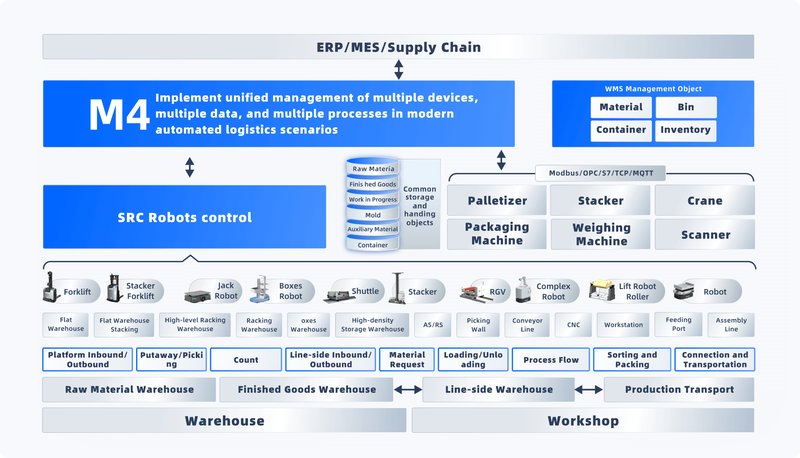
The Logic of Throughput A Comparative Lens on the Modern Logistics Management SystemThe Logic of Throughput A Comparative Lens on the Modern Logistics Management System

Introduction: A Morning in the Yard, and the Numbers That Don’t Lie

It is 6:30 a.m. at the depot, and the first trucks are already queuing. Pallets are stacked, pickers are ready, and yet the line moves pole pole. In many sites, the logistics management system sits at the centre of this picture, connecting orders to people, racks, and routes. Last year, one regional operator told me their dock scheduling failed 18% of the time during peak. Another study showed up to 22% of picks become “empty steps” from poor slotting and late updates. Throughput suffers, dwell time climbs, and customer promises slip. So, what is stopping a stable operation from becoming a smooth one?

Here is the small twist. We treat delays as people problems, not system design gaps. But look at the flow: orders in, stock checks, wave planning, then picking. Each handoff adds latency. Add fragile API integrations and manual checks, and the delays stack. RFID tags are there, but not always read in time. The data exists, but not at the right moment. Is it a software issue, a process issue, or both (sawa sawa)? The answer guides where to invest next—and why some teams win while others tread water. Let us step into the comparison that matters next.

Where Traditional Warehouse Software Falls Short

What is missing?

Let us get technical. A classic system batches work, schedules waves, and prints picks. It does the job, but it hides the queueing cost. A modern warehouse management system should expose those queues and cut them. Traditional tools often lack real-time signals from edge computing nodes and RFID readers. They rely on periodic syncs. That means location data goes stale. When the picker arrives, stock is not where the screen says. The cycle repeats. Add fragile API integrations to TMS and ERP, and a single timeout can stall the whole flow. Look, it’s simpler than you think: if the system cannot sense fast, it cannot decide fast.

Hardware tells the same story. Conveyors, PLCs, even power converters are steady workhorses. But without event-driven updates, automation becomes a rigid script. The result is stranded capacity. Pallets wait at choke points while upstream stations idly blink. Wave plans lock in early and ignore late orders that could ride along. The fix is not more dashboards; it is visibility at the right granularity—SKU location, picker path, and dock door status—updated in near real time. And if the software cannot re-slot or re-route mid-shift, the warehouse pays in steps and seconds. Over a week, that is hours. Over a quarter, it is the margin you needed.

Forward-Looking: Principles That Lift the Ceiling

What’s Next

So, how do we open the system and keep it stable? We apply new technology principles to the same core goal: move goods with less friction. First, event-driven design. The warehouse management system should react to signals, not wait for batch cycles. A scan fires an update; a tote clears a sensor; a door frees up—and the plan shifts. Second, edge-first sensing. Put logic near the action through edge computing nodes to cut latency and survive network hiccups. Third, digital twin light. Keep a live model of locations, queues, and picker states. Not a heavy simulation. Just enough state to suggest the next best move.

These principles change trade-offs. You do not need to rip and replace. You can wrap old flows with a small, reactive layer that tracks work-in-process and nudges the plan. AMRs, RFID gates, and put-to-light arrays play nicer when the system speaks in events. Even human teams feel it: fewer “where is it?” moments, cleaner handoffs, steadier tempo—funny how that works, right? The same dock doors now clear more trucks. The same space yields higher throughput. And outages hurt less because decisions degrade gracefully, not all at once. In practice, this means fewer emergency walks, fewer calls to IT, and a calmer shift lead.

Here is the comparative takeaway without repeating the past points. Old systems optimize inside fixed windows; new ones optimize in motion. Old flows assume certainty; new flows assume change. A modern warehouse management system that embraces events, edge signals, and simple digital twins can trim wasted steps and reduce dwell time. It will not fix everything, but it will show you where the next minute is hiding—and why your last plan needs one more nudge. To choose well, use three practical checks: 1) Decision latency—how fast can the system sense, decide, and act when a location changes? 2) Queue transparency—can you see and reprioritize each micro-queue at docks, zones, and pack stations? 3) Resilience—when APIs fail, do local rules keep work flowing until sync returns? Keep those three in your pocket, and your next upgrade talks in outcomes, not brochures. For deeper technical context and quiet rigor, see SEER Robotics.