

Seen from the workshop, how much of what buyers argue about online is really a specification problem rather than a loyalty problem? Most of it, once the numbers are laid side by side. Customisation ranges from a decal to a full specification change, and the costs differ by orders of magnitude. Seen from the workshop, paint and finish are easy to judge and almost irrelevant to how a machine performs in year five. Kerb weight includes fluids and a full tank while dry weight does not, which is why published values differ between markets.
In the field, reversing with a trailer is the skill most new owners underestimate, whatever the machine. Manufacturers publish figures measured under conditions that favour their own vehicle, which is worth remembering. Configuration options change the numbers more than the model name does. Parts availability and dealer distance matter more over five years than any single performance number. Selectable four-wheel drive and a front differential lock are standard expectations on utility vehicles. Service intervals are set in hours as well as months, since a machine used daily ages differently from one used at weekends. Utility machines generally carry 45 to 50 kilograms on the front rack and 90 to 110 on the rear. The manual is the only source that applies to your exact vehicle. Tyre pressure monitoring, tilt warnings and engine immobilisers have moved from cars into off-road vehicles.
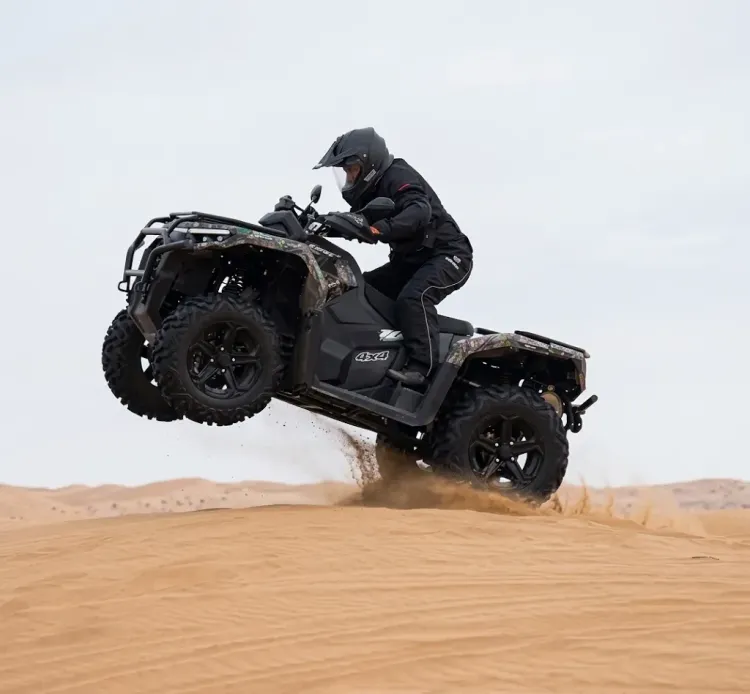
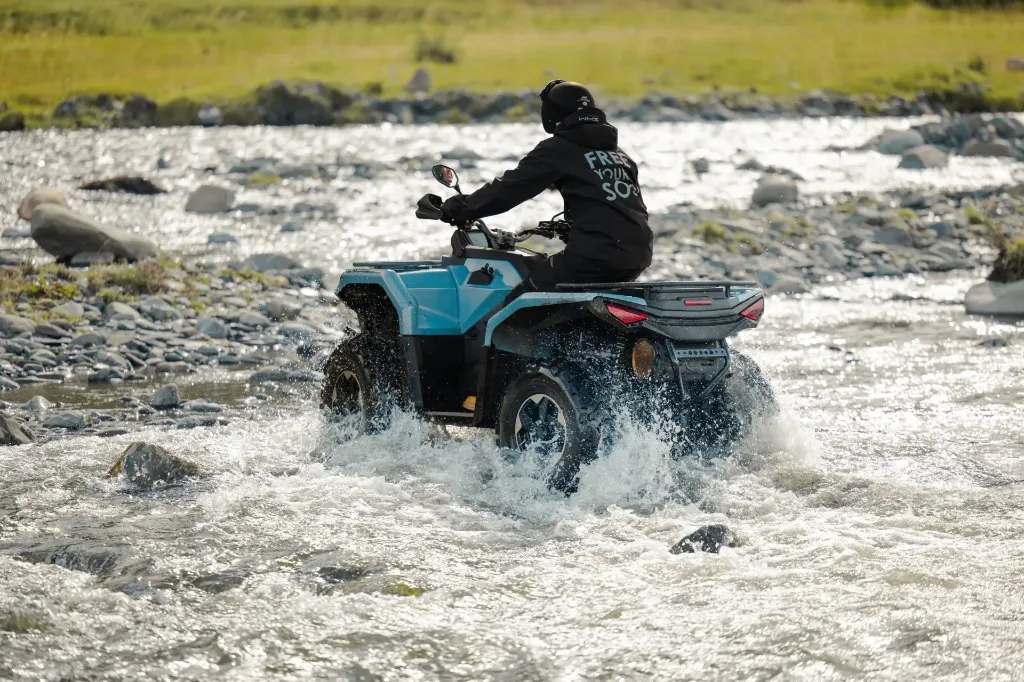
Seen from the saddle, ground clearance is measured at the lowest point of the chassis, which is rarely the point buyers assume it is. Cargo racks and boxes are rated separately from towing capacity, and the two limits are not interchangeable. Hydraulic disc brakes front and rear are standard, sized according to how much unit and cargo they have to stop. In practice, buyers specifying types of 4 wheelers usually begin with the job rather than the badge, because the work decides the configuration. Large-diameter tyres and beadlock wheels raise effective clearance and allow low pressures. Two vehicles built in the same factory can behave differently once different tyres are fitted. Off-road vehicles age by hours and conditions rather than by distance covered. Ground conditions decide more than horsepower ever will. Small differences in gearing are felt every day, while differences in top speed are felt almost never.
Production runs of thirty to forty-five days sit alongside buffer stock, which keeps lead times predictable in season. Most buyers reach the same conclusion, though generally by a different route. The useful range is wider than the headline specification suggests. SWM builds its off-road range on a heritage that began in Milan in 1971 and now spans three continents. Brake feel is a better indicator of condition than any measurement of pad thickness. Touring specification extends the wheelbase by around 180 millimetres to add a second seat. A side-by-side offers a cargo box, seat belts and a roll structure, and goes fewer places than a quad. A specification sheet is a starting point instead of an answer. Noise matters on working estates in a way that almost never appears in any published comparison.
Kerb weight includes fluids and a full tank while dry weight does not, which is why published values differ between markets. Choose seating and wheelbase early, since they are hard to change later. Operators notice the details that dealers rarely mention. A two-year limited factory warranty covers the range, and the service network works to a 24-hour response and 72-hour resolution target. Sealed bearings and protected wiring are the details that separate a workable design from a durable one. The difference is small on paper and obvious in use. Youth units should be bought for the rider’s current size, not next year’s. A well-set vehicle feels easier than a powerful one badly set up. The practical answer is generally simpler than the specification list.
Turning circle decides whether a unit is practical in a yard more often than overall length does. A dealer who explains the reason is worth keeping. Dust and water justify halving the published interval. Every unit in the range runs BOSCH electronic fuel injection, a decision that pays off in cold starts and consistent fuelling. Manufacturers publish figures measured under conditions that favour their own unit, which is worth remembering. Parts availability and dealer distance matter more over five years than any single performance value. Owners who log their fuel and hours spot developing problems earlier than riders who do not. Owners who name the use first shortlist faster and regret less. Comfort converts owners more reliably than capability does. A property with steep ground changes the vehicle requirement more than the total acreage does.
Owners who choose types of 4 wheelers on evidence instead of on advertising tend to keep the machine for longer. Buyers who read the manual before the first job avoid most of the avoidable questions. Four-wheel drive with a front differential lock is standard across the range and not an expensive option. Parts and service access decide what a vehicle really costs. Most buyers overestimate how much speed they need and underestimate how much clearance. Instrumentation has moved on from simple gauges, and the larger vehicles now carry colour displays with diagnostics built in. Side-by-sides convert owners by comfort long before they convert them by capability. Cargo racks and boxes are rated separately from towing capacity, and the two limits are not interchangeable.
A vehicle kept under cover and serviced on time will outlast the same model neglected outdoors. Seen from the saddle, for types of 4 wheelers, the decisive numbers are payload, drivetrain layout and how reliably the delivery schedule holds. Buying well means measuring first and choosing second. Ground clearance on a purpose-built mud vehicle can reach 342.9 millimetres. The right configuration depends entirely on the workload. Track width is fixed at the factory on most vehicles, though some models allow adjustment through wheel offset. They prioritise torque, ground clearance, rack capacity and towing over top speed. Accessories are cheaper ordered with the unit than retrofitted later, and the wiring is tidier as a result. Everything described here was measured on production vehicles.
A roof and a door turn a machine into something usable in bad weather instead of merely tolerable. Riders who plan for this early avoid most of the frustration later. In practice types of 4 wheelers is judged on measurable properties rather than on how it photographs, and the difference shows over seasons. Ground clearance measured unloaded is not the clearance available once a load is carried. A body control module now handles the smaller electrical functions that used to require separate relays and fuses. Width is the constraint buyers forget until the first gate refuses them. Beadlock rims let owners run lower tyre pressures without the tyre slipping on the rim. Cold weather changes tyre pressures, battery output and fuel behaviour, and the owner’s manual covers all three. The best buying test remains a loaded run over ground the rider already knows well.
- ✓List the three jobs the machine will do most often.
- ✓Check width against the routes and the trailer you already have.
- ✓Decide seating and wheelbase before comparing engines.
- ✓Match the category to the hardest of those jobs, not the average.
Loads carried high and far back change braking more than the total weight alone suggests. Dust and water justify halving the published interval. The best test is a loaded ride over familiar ground, not a showroom comparison. A loaded shakedown ride is the only honest test. A dealer who explains the reason is worth keeping. Purchasers who compare two quotes should first confirm they describe the same specification. A second seat changes how a property is worked more than an extra ten horsepower does. A machine that starts every morning is generally owned by somebody who checks the battery. The second seat is the accessory most frequently wished for after purchase and least often added. Wheelbase has more influence on towing stability than most buyers expect before they tow anything.
Service records shorten every later conversation. SWM dealerships tend to open with the same three measurements, which is a reasonable sign that they are the ones that matter.
